Ceremony & Religion
Candles remain central to religious observance, remembrance, vigils, holidays, and cultural ceremonies.
Trusted by












Reviews
We purchased our PRIMO Melter and EZ system from Melting & Filling Equipment for our ointment and...Rowena, Herbs From Wales, UNITED KINGDOMRead more
We love the PRIMO 1000 & PRIMO 2000 we ordered. They are definitely speeding up our wax melt...Tyson K., Candle Warmers Etc.Read more
I just wanted to take a moment to thank all of you- you are truly a pleasure to do business with....Shannon D., Pure Light Candle CompanyRead more
We were so pleased with our melting tank that we ordered another melter the same exact day. It...Jim, J.C. Danczak, Inc., Westfield, MassachusettsRead more
It takes us 15 minutes to do what used to take us 45 minutes. AND, that was just the first day.Thomas Crane, Purely Wax Werks, Vancouver, WashingtonRead more
We're growing FAST and that PRIMO 75lb melter is a huge piece of it…we will most likely need one...Dave D., Dilo HomeRead more
We are still so happy with the (2) PRIMO 50 melters we bought from you 8 years ago for our soy...Glenn C., Madeline Island CandlesRead more
What used to take me hours, now takes me minutes! Love it!! I will recommend your company to other...Sonja Minic, Managing Director & Candle Artisan, Green Scents Pure Soy Candles, AustraliaRead more
We purchased the EZ Filling System and increased our production 50% the first day! Reduced our...Ellen Kay R., New Boston CandleRead more
I kissed my melter....Thank you!!!!!!!! I sincerely do not know how I did without one! What took me...Jenny W., HB Wax Manufacturing Inc., Ontario, CANADARead more
Without the AutoShot system in our facility we would have had extreme backorders and labor costs...Kevin Preece, COO, Scentsy, Meridian, IdahoRead more
WaxMelters customized our extreme tank exactly the way we needed it. This PRIMO 2000 is even better...Tom B., Wholistic BotanicalsRead more
Romans are commonly credited with developing early wicked candles by repeatedly dipping rolled papyrus in melted tallow or beeswax. Other cultures developed candles from locally available fats, insects, plants, tree nuts, and waxes.
Tallow candles were widely used in Europe, while cleaner-burning beeswax candles were more expensive and often associated with churches and wealthier households. Candle making became an established trade practiced by chandlers.
Colonial candle makers used tallow and experimented with bayberry wax. Bayberry produced a clean, aromatic candle but required large quantities of berries for a relatively small wax yield.
Spermaceti from the sperm-whale industry produced a harder, brighter, lower-odor candle than tallow and was important in the development of standardized candlepower measurements.
Stearin chemistry and braided, self-trimming wick construction improved candle hardness, flame behavior, and consistency.
Joseph Morgan developed a machine that used a cylinder and movable piston to eject candles as they solidified, enabling continuous production of molded candles and helping make candles more affordable.
Refined paraffin became commercially viable. It was economical, relatively clean burning, and compatible with industrial production; stearic acid helped address early paraffin's low melting point.
As kerosene and electric lighting displaced candles as everyday illumination, candles increasingly became ceremonial, decorative, emergency, and gift products.
The market expanded through scented container candles, decorative formats, specialty blends, soy- and palm-derived systems, gels, synthetic waxes, improved vessels, automated filling, and more sophisticated safety testing.
Candles remain central to religious observance, remembrance, vigils, holidays, and cultural ceremonies.
Modern candles combine flame, color, vessel design, and fragrance to shape the atmosphere of homes, hospitality spaces, and events.
Candle production spans hand-poured artisan batches, private-label manufacturing, institutional supply, and high-volume automated filling.
Explore equipment for melting, holding, transfer, filling, dipping, and candle manufacturing.
View Candle Manufacturing EquipmentMelt · fill · finish energy
Four finished looks in one square: jars, color runs, wax blocks and boutique glow that match melt, hold and heated fill on WaxMelters gear.
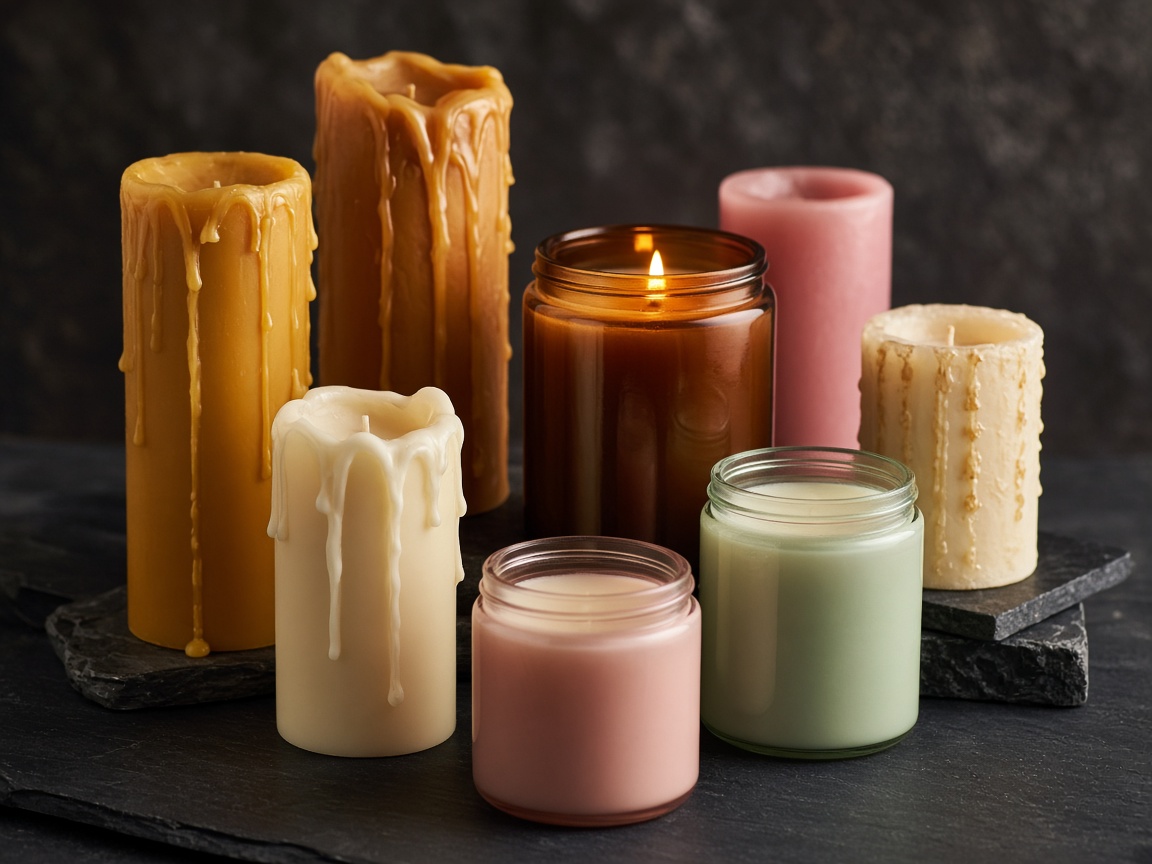
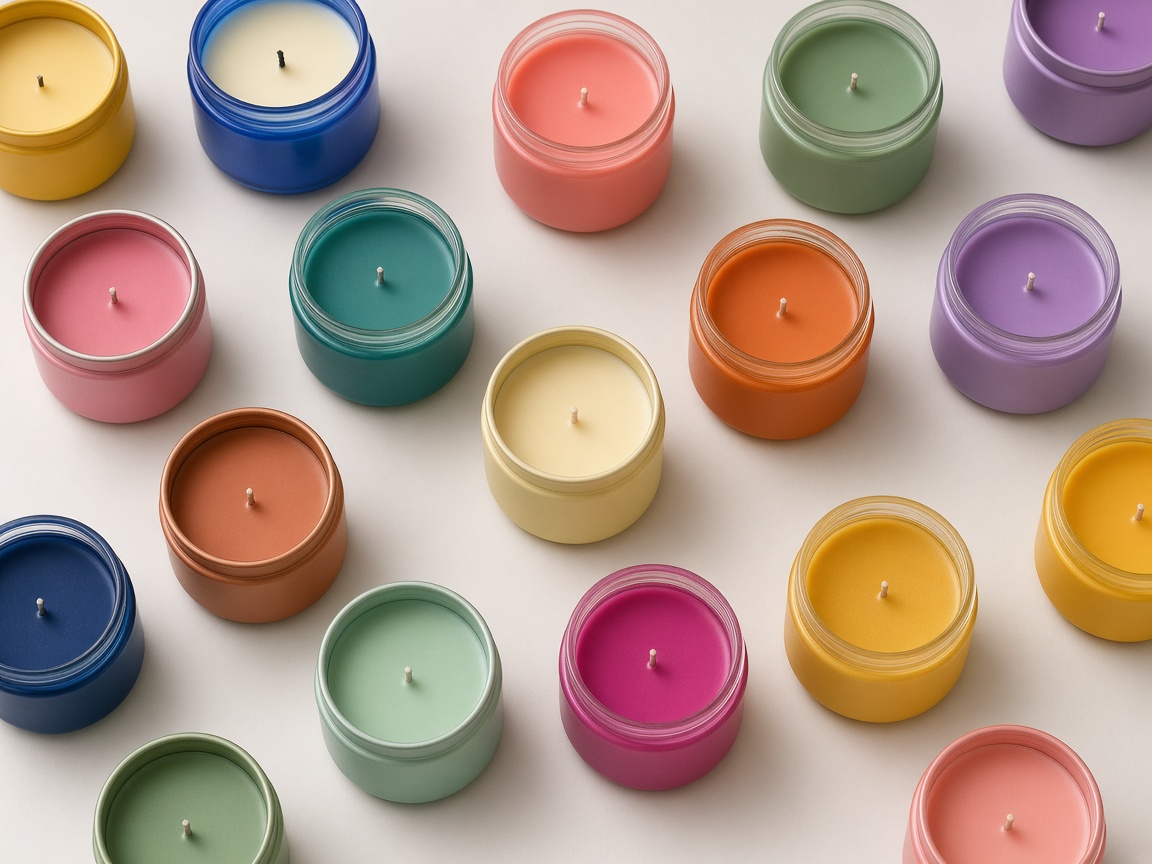
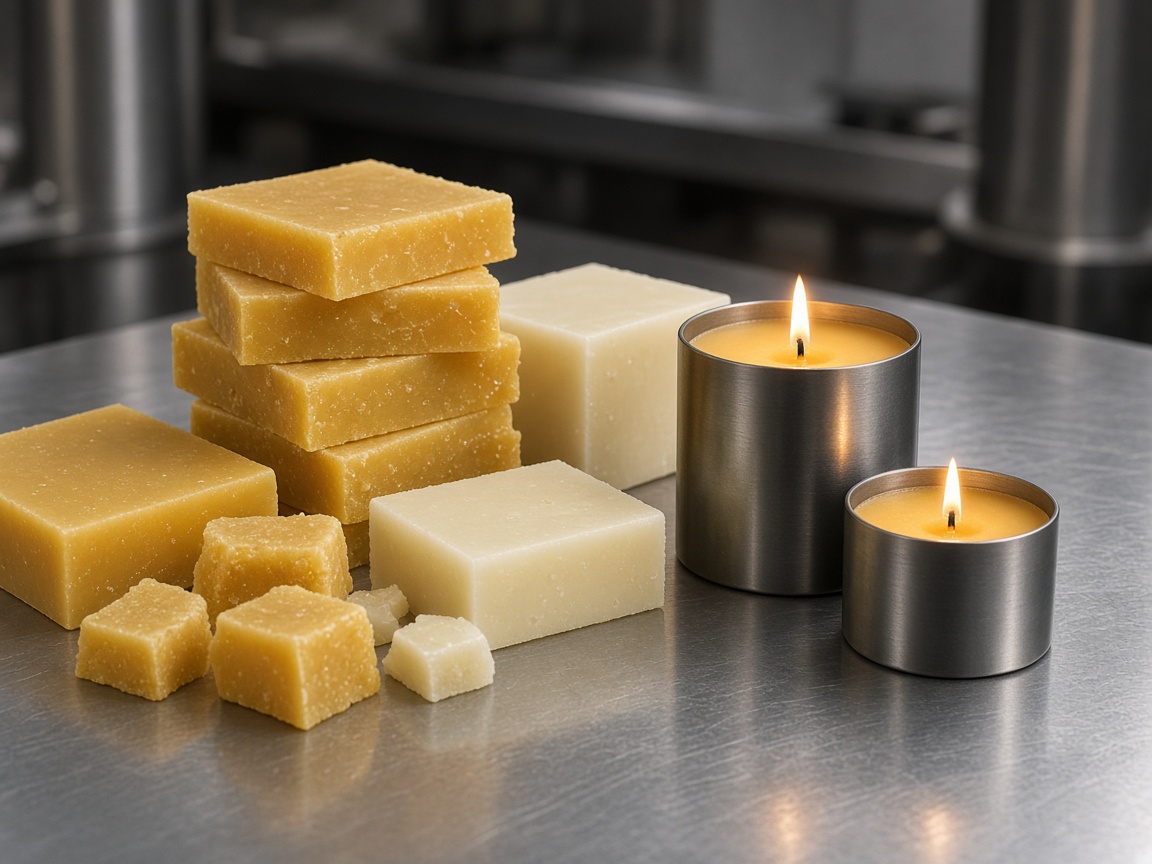
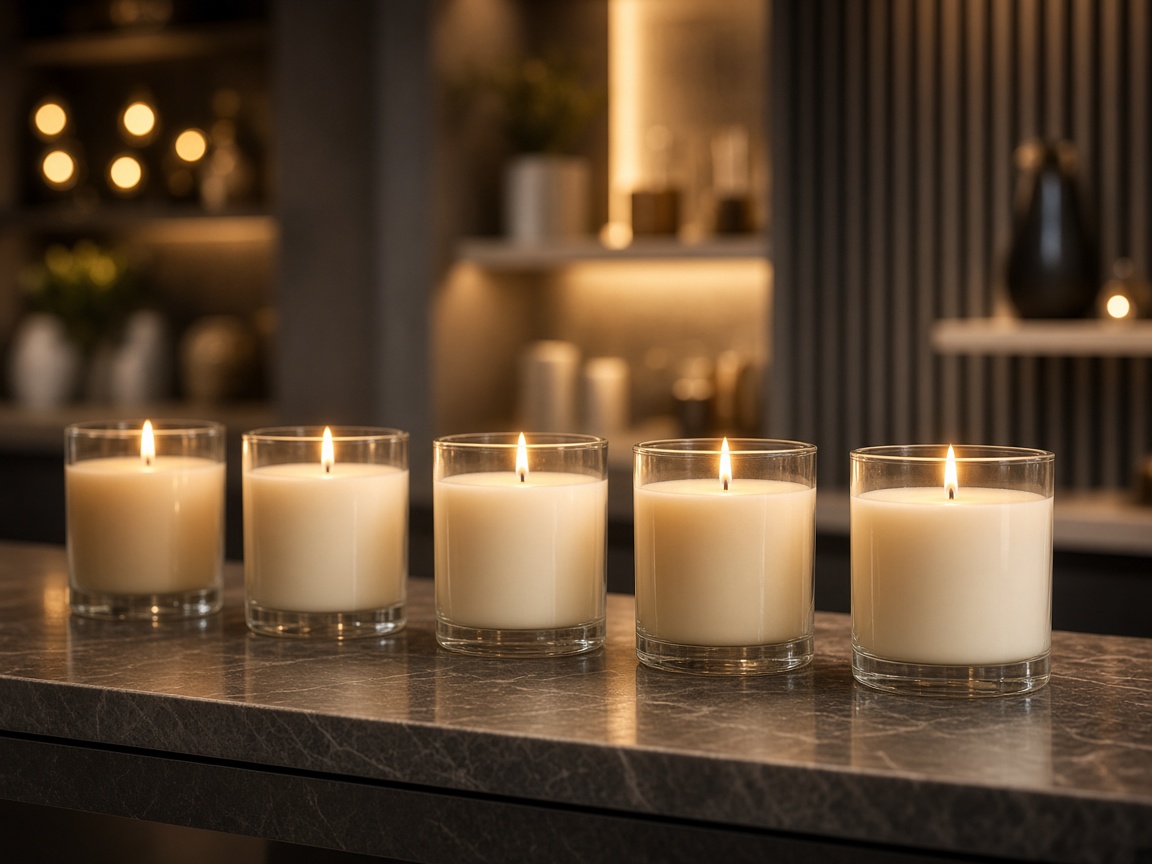
Illustrative lifestyle imagery for candle production vibe. Not a claim about specific equipment in the photos.
History of candles
A concise history of candles as lighting, ritual and manufactured goods - written so production buyers understand how materials and formats evolved into today's container, pillar and specialty candle lines.
Then and now
Tallow, beeswax and early wax sources.
Stearin, paraffin and scaled manufacturing.
Containers, pillars, tapers and specialty SKUs.
History leads to modern melters and fillers.
Viscosity at operating temperature
Every era of candle making still needed workable wax flow - today we call that viscosity at pour temperature and size PRIMO tanks around it.
How thick the batch is at the temperature you actually melt, hold, transfer or fill, not room temperature on the bench.
Heat lowers viscosity so product moves through a heated pump, hose and fill head without setting in the line.
Tank family, pump, heated hose and head around viscosity at operating temperature, plus elevation and hose length.
Technical shortlist
Waterless control replaces open-fire and crude pots.
Production consistency for jar lines.
Pair history with facts and materials pages.
Built for today's candle manufacturers.
Quick answers
It is context - jump to equipment hubs when you are ready to size a line.
History of candle-making equipment, then live candle equipment.
Modernizing a line? Send wax type, batch size and container format.
 Secure checkout via Authorize.Net
Sizing by batch, heating options, footprint and the questions to ask before you buy. A 6-page PDF for production and purchasing teams.
Did you know? · Easy to clean
Round tank, no corners to clean. Round 304 stainless interior with a #4 finish and no corners: wipe it out like a high-end cooking pot.
Did you know? · Easy to clean
The fillers are heated stainless steel and PTFE (Teflon). Fast Batch Changes Without Cross-Contamination of Colors, Scents or Waxes.
Did you know? · Easy to clean
This keeps your wax clean, eliminates cross-contamination, and allows you to switch between products quickly without draining or cleaning the tank.
Did you know? · Energy
Energy Efficient: 2-3X Faster on Half the Electricity. Questions? Call (888) WAX-MELTERS | (888) 929-6358.
Did you know? · Melts faster
Precision digitally controlled fast, even heating with no hot spots.
Did you know? · Melts faster
Fast, safe and precise melting of wax hand wax without overheating, burning or hot spots.
Did you know? · Warranty
Standard Limited Warranty: 1 Year Electrical, 3 Years Metal Parts. See warranty details
Why WaxMelters