TECHNICAL BUYER'S GUIDE
Waterless vs. Water-Jacket Wax Hand Machines
Both designs can use removable wax chambers. The fundamental difference is what surrounds those chambers—and what that architecture costs in space, bulk, heating-system mass and workstation design.
Look Inside the Machine
WaxMelters has serviced conventional water-jacket wax-hand equipment, providing a clear view of the physical architecture. The purpose of this comparison is not to criticize another brand; it is to show why two machines that both use removable wax vessels can have radically different footprints.
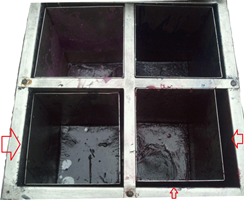
Traditional Water-Jacket Architecture
Individual wax vessels sit within a larger structure that contains the heated-water space used to transfer heat to the wax vessels.
Annotate the image: Removable Wax Vessel · Heated-Water Space · Retention Hardware
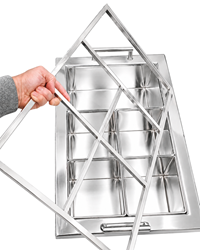
PRIMO Waterless Architecture
PRIMO keeps the removable stainless-steel wax-chamber concept while eliminating the conventional surrounding heated-water jacket.
Annotate the image: Removable Stainless Chamber · PRIMO Waterless Thermal Architecture · EZ-Clean Topper™
PRIMO Waterless: Stop Paying for the Water Jacket.
Less space. Less bulk. No heated-water jacket. More room for your business.
| Business Factor | Traditional Water-Jacket Architecture | PRIMO Waterless Architecture |
|---|
| Heating medium | Wax vessels plus a surrounding heated-water system | No conventional heated-water jacket around the wax chambers |
| Equipment packaging | Physical space required for water-jacket structure | Space-efficient architecture supports compact tabletop systems |
| Thermal mass | Heating system includes the surrounding bath | No surrounding heating-water bath to bring into operating condition |
| Water management | System may require filling, maintaining and draining heating water | No heating-water jacket to fill or drain |
| Operating mass | Machine + wax + heating-water mass when filled | Machine + wax; cooling water remains a separate process stage |
| Tabletop design | Possible in some designs, but jacket volume constrains packaging | PRIMO standard line reaches as small as a 14 × 12 × 13 in. single-chamber system |
| Mobile operation | Often moved as a complete floor-standing cart | X-Press specifically collapses from approx. 30 in. to approx. 17 in. high |
| Storage | Cabinet volume may be occupied by heating architecture | 305 uses lower cabinet volume as enclosed operator storage |
FOOTPRINT EXAMPLE
Up to 59% Less Rectangular Floor Footprint*
PRIMO Wax Hands 4 Compact: 20 × 20 in. = about 2.78 sq. ft.
Selected current conventional 4-sleeve floor-standing model: 48.5 × 20.25 in. = about 6.82 sq. ft.
Difference: approximately 59% less rectangular equipment footprint for PRIMO 4.
*Outside-dimension footprint comparison only. Capacities, chamber designs and required operating clearances differ. Do not interpret this as a claim that every PRIMO model is 59% smaller.
Why Footprint Is a Business Cost
Retail / Attraction
Equipment occupies leased or otherwise valuable floor/counter area that could be allocated to guest flow, checkout, finishing, merchandise or another revenue-producing activity.
Festival / Booth
The booth fee may be fixed, but a smaller machine leaves more of the paid footprint available for customers and workflow.
Vehicle
Transport volume can dictate vehicle choice and the number of items loaded for every event.
Custom Attraction
A large tabletop system can integrate into the venue's existing counter instead of forcing the attraction to allocate separate floor area to a generic cart.
Why “Waterless” Does Not Mean “No Water Anywhere”
Wax-hand production commonly uses cool or ice water as part of the forming/cooling stage. PRIMO's “waterless” claim refers specifically to the heating architecture: no conventional heated-water jacket surrounds the wax chambers.
This distinction is important because PRIMO can still offer a Professional Integrated Cooling Station while remaining a waterless heating system.
What About Removable Chambers?
Removable wax vessels are not unique to PRIMO. WaxMelters calls them removable wax chambers; other manufacturers may call them sleeves, vats or compartments. The PRIMO difference is combining removable chambers with waterless heating, compact packaging, the standard EZ-Clean Topper™, integrated cooling options and purpose-built commercial platforms.
PRIMO EZ-Clean Topper™
The removable finished top sits over the multi-chamber arrangement to help direct drips toward the intended color, keep wax out of the spaces around removable chambers, help contain residual wax during normal movement and create a cleaner stainless-steel work surface. It is standard on new multi-chamber PRIMO Wax Hands production.
No Proprietary Wax Required
PRIMO equipment does not require WaxMelters-branded wax. Use appropriate commercially available low-melt wax-hand paraffin and source wax and colors locally whenever practical. This can reduce freight and supplier dependence, particularly for high-volume and international operators.
Which Architecture Is Right for You?
Compare the complete operating requirement: machine footprint, chamber layout, vehicle transport, cooling, storage, venue integration, electrical service, wax sourcing and total workflow—not only the purchase price.
Use the PRIMO Equipment Selection Guide →
Published by Melting and Filling Equipment, Inc. / WaxMelters. © 2026. Comparison examples use outside dimensions and publicly available equipment specifications current at the time of review. Specifications can change.


