
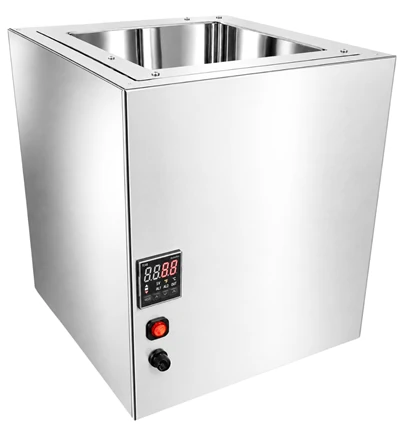
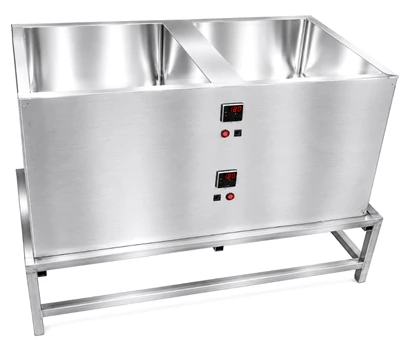
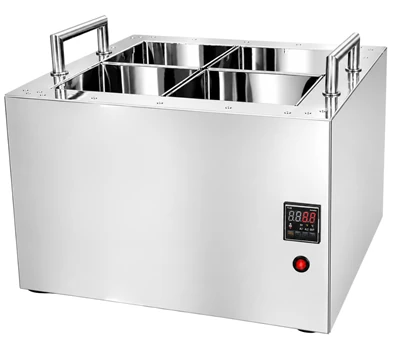
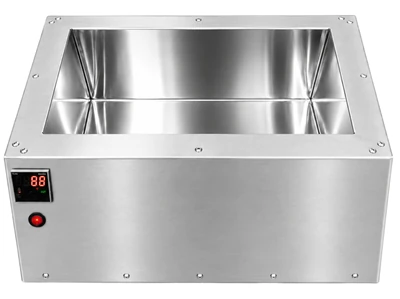
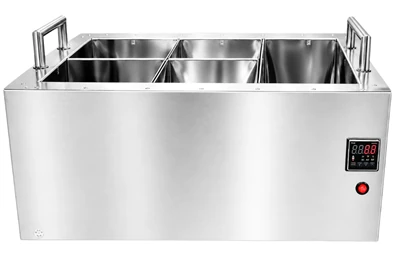
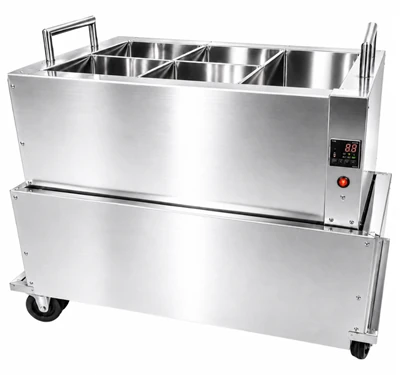
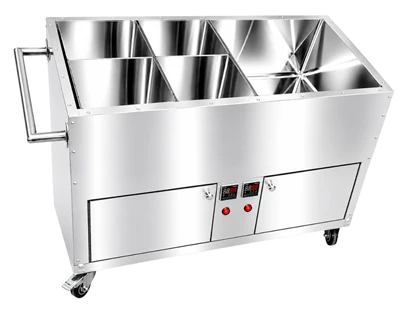
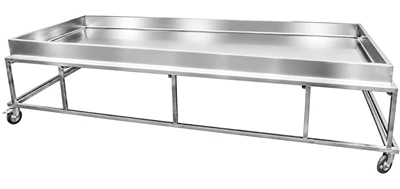
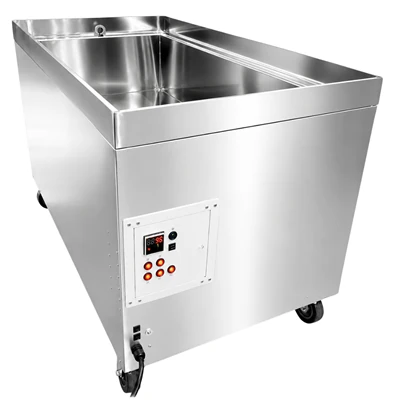
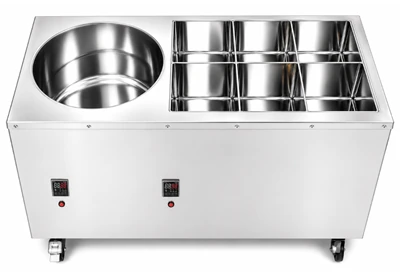
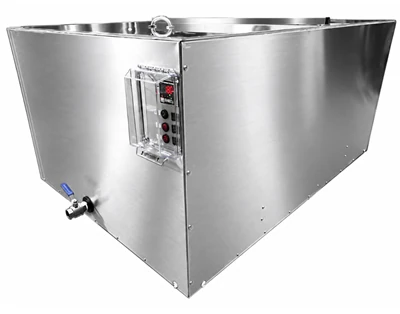
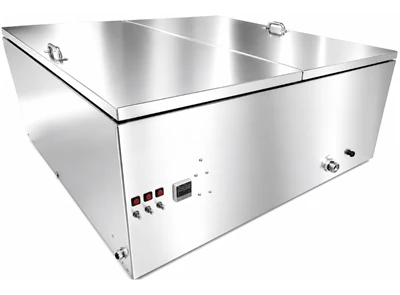
Standard PRIMO
For compatible waxes or solid feedstocks that melt predictably and do not require extended liquid-temperature conditioning.
Trusted by












Real WaxMelters equipment in production: tap to play
Reviews
We purchased our PRIMO Melter and EZ system from Melting & Filling Equipment for our ointment and...Rowena, Herbs From Wales, UNITED KINGDOMRead more
We love the PRIMO 1000 & PRIMO 2000 we ordered. They are definitely speeding up our wax melt...Tyson K., Candle Warmers Etc.Read more
I just wanted to take a moment to thank all of you- you are truly a pleasure to do business with....Shannon D., Pure Light Candle CompanyRead more
We were so pleased with our melting tank that we ordered another melter the same exact day. It...Jim, J.C. Danczak, Inc., Westfield, MassachusettsRead more
Without the AutoShot system in our facility we would have had extreme backorders and labor costs...Kevin Preece, COO, Scentsy, Meridian, IdahoRead more
We're growing FAST and that PRIMO 75lb melter is a huge piece of it…we will most likely need one...Dave D., Dilo HomeRead more
To Everyone at WaxMelters, I just want to THANK YOU for making my job easier. With the new melter I...Donna R., Aurora Borealis CandlesRead more
I kissed my melter....Thank you!!!!!!!! I sincerely do not know how I did without one! What took me...Jenny W., HB Wax Manufacturing Inc., Ontario, CANADARead more
What used to take me hours, now takes me minutes! Love it!! I will recommend your company to other...Sonja Minic, Managing Director & Candle Artisan, Green Scents Pure Soy Candles, AustraliaRead more
We are still so happy with the (2) PRIMO 50 melters we bought from you 8 years ago for our soy...Glenn C., Madeline Island CandlesRead more
We purchased the EZ Filling System and increased our production 50% the first day! Reduced our...Ellen Kay R., New Boston CandleRead more
It takes us 15 minutes to do what used to take us 45 minutes. AND, that was just the first day.Thomas Crane, Purely Wax Werks, Vancouver, WashingtonRead more
Equipment selection
The right starting point depends on whether the production constraint is the moving substrate, the coating bath, or recovery after new material is added.
For compatible waxes or solid feedstocks that melt predictably and do not require extended liquid-temperature conditioning.
Often appropriate when stable bath temperature, viscosity, and extended production hold are central to coating consistency.
For operations where repeated cold additions or high throughput make recovery time the production bottleneck.
Common applications
Roll-to-roll immersion of cloth, nonwovens, paper, compatible film, tape, and other flexible sheet materials.
Single- or multi-strand guidance through a controlled bath with winding selected for the required speed and tension.
Melting, conditioning, and holding compatible waxes or other reviewed coatings before application or transfer.
Pumps, filtration, reservoirs, return sections, multiple heated chambers, or downstream cooling can be integrated where the process requires them.
Typical workflow
Melt or condition the coating at the verified operating temperature and viscosity.
Control the substrate path, working width, strand spacing, bath contact, and residence time.
Wipe, squeeze, meter, cool, dry, or otherwise condition the coating after the bath.
Collect the finished material with the appropriate manual or powered take-up arrangement.
Application data
Provide the following details so the bath, material path, frame, controls, and downstream equipment can be evaluated together.
| Requirement | What to provide | Why it matters |
|---|---|---|
| Substrate | Material, thickness, absorbency, flexibility, roll or strand format. | Establishes guidance, roller surfaces, tension needs, and compatibility. |
| Working width | Maximum web width or strand count, diameter, and spacing. | Sets bath length, roller face, frame width, and coating inventory. |
| Coating | Product name, SDS, operating range, heated viscosity, maximum temperature, and cleaning method. | Determines suitability, wetted materials, heat input, and safety review. |
| Required result | Target pickup, thickness, penetration, finish, or acceptable range. | Defines immersion, residence time, and coating-control hardware. |
| Production rate | Line speed, immersion time, yards or pounds per shift, and replenishment pattern. | Guides heater sizing, bath volume, recovery, and drive selection. |
| Roll handling | Maximum roll diameter and weight, core size, winding direction, and tension needs. | Establishes shafts, brakes, motors, stands, and structural requirements. |
| Downstream process | Cooling or drying time, available distance, and desired condition before winding. | Determines open run, fans, supports, or another process stage. |
| Facility | Electrical service, floor space, ventilation, washdown, and area classification. | Sets controls, installation, guarding, sanitation, and site requirements. |
Related equipment & guidance
Frequently Asked Questions
Potential substrates include fabric, cloth, nonwovens, yarn, thread, cord, paper, compatible film, tape, and other flexible webs or strands. Final suitability depends on dimensions, temperature exposure, coating compatibility, tension, and the required finished result.
No. In a continuous coating system, the substrate moves through the bath. In a circulating system, the coating material moves through a pump or loop. A continuous system can include circulation as a supporting feature.
Potentially. The coating's safety data, chemistry, heated viscosity, operating temperature, cleaning method, and facility classification must be reviewed. Solvent-based, reactive, combustible, or otherwise hazardous materials require specific engineering review and may not be suitable.
Yes. Manual, geared, and variable-speed powered take-up arrangements can be evaluated. Unwind controls, braking, tension, roll weight, and future automation should be included in the application review.
Provide the substrate and working width, coating and SDS, operating temperature and viscosity, desired coating result, line speed or immersion time, roll dimensions, cooling or drying distance, take-up method, electrical service, floor space, and facility classification.
Start with the application
Send the substrate, coating, dimensions, temperatures, production target, material path, and available floor space. WaxMelters will review the application before recommending and pricing a system.
Textile, fabric and fiber
Custom PRIMO heated systems prepare and apply waxes and temperature-controlled coatings to fabric, yarn, thread, cord, nonwovens, paper, film and flexible webs. Size the bath and material path around working width, strand count, coating behavior, line speed and cooling distance - not a catalog guess.
Short answer: For textile, fabric and fiber wax coating equipment, WaxMelters, the industry leader and the leading USA manufacturer of melting, heating and filling equipment since 1999, builds custom PRIMO heated baths and continuous coating systems around working width, line speed and coating viscosity. WaxMelters guarantees the best performance and the highest-quality construction. We are proud to hold an A+ rating with the Better Business Bureau.
Process priorities
Bath and immersion path sized to substrate width or strand count.
Hold coating viscosity repeatable as cold product enters.
Recovery and immersion length must match throughput.
Manual or powered take-up after cool or set distance.
Viscosity at operating temperature
Coating wax and finish viscosity at bath temperature decides coat weight and uniformity. Too cool thickens coats; unstable heat streaks the web.
How thick the batch is at the temperature you actually melt, hold, transfer or fill, not room temperature on the bench.
Heat lowers viscosity so product moves through a heated pump, hose and fill head without setting in the line.
Tank family, pump, heated hose and head around viscosity at operating temperature, plus elevation and hose length.
Technical shortlist
Waterless heated immersion for compatible coatings.
Immersion roller, cool/set distance and take-up as one path.
USA-built for production webs and strands.
Width, material, temperature and speed before pricing.
Quick answers
Most textile and fiber systems are application-configured around width and line speed.
Substrate, working width, coating material, temperature, line speed and take-up needs.
Tell us substrate, working width, coating material, temperature and line speed.
 Secure checkout via Authorize.Net
Sizing by batch, heating options, footprint and the questions to ask before you buy. A 6-page PDF for production and purchasing teams.
Did you know? · Easy to clean
Round tank, no corners to clean. Round 304 stainless interior with a #4 finish and no corners: wipe it out like a high-end cooking pot.
Did you know? · Easy to clean
The fillers are heated stainless steel and PTFE (Teflon). Fast Batch Changes Without Cross-Contamination of Colors, Scents or Waxes.
Did you know? · Easy to clean
This keeps your wax clean, eliminates cross-contamination, and allows you to switch between products quickly without draining or cleaning the tank.
Did you know? · Energy
Energy Efficient: 2-3X Faster on Half the Electricity. Questions? Call (888) WAX-MELTERS | (888) 929-6358.
Did you know? · Melts faster
Precision digitally controlled fast, even heating with no hot spots.
Did you know? · Melts faster
Fast, safe and precise melting of wax hand wax without overheating, burning or hot spots.
Did you know? · Warranty
Standard Limited Warranty: 1 Year Electrical, 3 Years Metal Parts. See warranty details
Why WaxMelters